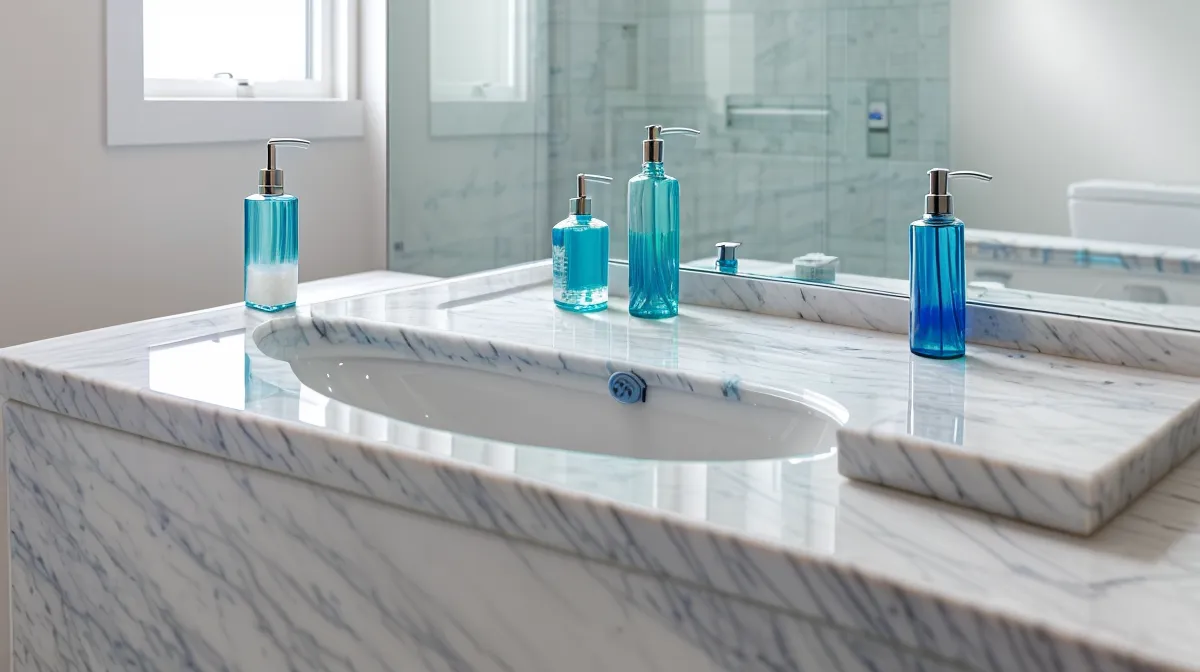
Why does the burn from mouthwash fade into something worse than what you started with, dry, tight, almost chapped, instead of leaving your mouth actually clean? That question pulled me into an oral microbiome rabbit hole, a cabinet full of half-used probiotic bottles, and more biohacking forum threads than I'd like to admit. I'm not a dentist or a microbiologist, just someone who works in tech and reads ingredient labels the way other people read box scores. This is my running probiotic review of what happened once I treated my own mouth like a dental health experiment and stopped reaching for the neon blue bottle.
Quick disclosure up front: this site runs on affiliate links, so if you buy something through one of them, I earn a commission at no extra cost to you. I only write about products I've actually tested in my own bathroom cabinet — the good, the underwhelming, and the ones that tasted like chalk and got shelved. None of this is medical advice, so if you're managing an underlying health condition, loop in your dentist or doctor before changing your routine.
What's Actually Living in Your Oral Microbiome?
Your mouth isn't some sterile surface you're supposed to scrub down to nothing. It's closer to a living biofilm, a whole community of organisms holding a kind of truce with each other. Anyone who's kept a fish tank running knows the feeling: scrub the tank too aggressively and you crash the whole system, algae and all, and the fish suffer for it even though the water looks cleaner. Your mouth runs on a similar kind of truce, tracked loosely by pH, and when that truce breaks down is usually when trouble — cavities, gum irritation, the kind of morning breath that outlasts brushing — starts moving in.
A neighbor of mine homebrews kombucha in his garage, and watching him fuss over his SCOBY like it's a temperamental pet taught me more about bacterial balance than any dental study ever could — too much of one thing, not enough of another, and the whole batch goes sideways. Bacteria, it turns out, aren't the enemy so much as the tenants, and the question isn't how to evict them all but which ones you actually want signing the lease.
One conversation stuck with me more than the others: I brought this up with a friend over coffee on South Congress Avenue, and she asked, reasonably, why anyone would want more bacteria in a mouth when the entire point of brushing is to get rid of it. Fair question. The honest answer is that you can't actually get rid of it — you can only decide which species get to dominate the real estate, and mouthwash, by wiping out almost everything indiscriminately, tends to hand that real estate to whoever recovers fastest, which usually isn't the bacteria you'd pick if you were choosing.
Is Mouthwash Actually Working Against You?
Here's the pattern that took a while to click for me: the antibacterial rinse I trusted to fix my breath turned out to be the thing quietly causing the problem in the first place.
Before I found probiotics, a dentist actually prescribed a chlorhexidine rinse after a deep cleaning — the hospital-grade stuff — and it did nothing to fix the dryness. If anything, my mouth felt more stripped afterward, not less, and the sensitivity I was trying to get rid of stuck around long after the appointment was over. It didn't work.
The actual proof came somewhere unglamorous — I grabbed a cold sparkling water from the fridge one afternoon, drank half the can before I noticed there was no jolt, no sensitivity zing across my front teeth. Nothing.
There's a longer explanation elsewhere of exactly how that balance gets tipped in the first place, but the short version is that killing everything indiscriminately just clears space for whatever moves in next.
The ProDentim Experiment
Switching to ProDentim wasn't a dramatic decision so much as a process of elimination (I'd tried enough powders and lozenges that tasted like chalk dust to know what I didn't want), and this one had a strain list I could actually pronounce.
Picking a strain isn't as simple as grabbing whatever's cheapest, either — there's a whole K12-versus-M18 debate among the label-readers that's worth its own deep dive, but for now just know the specific strain matters more than the marketing copy suggests.
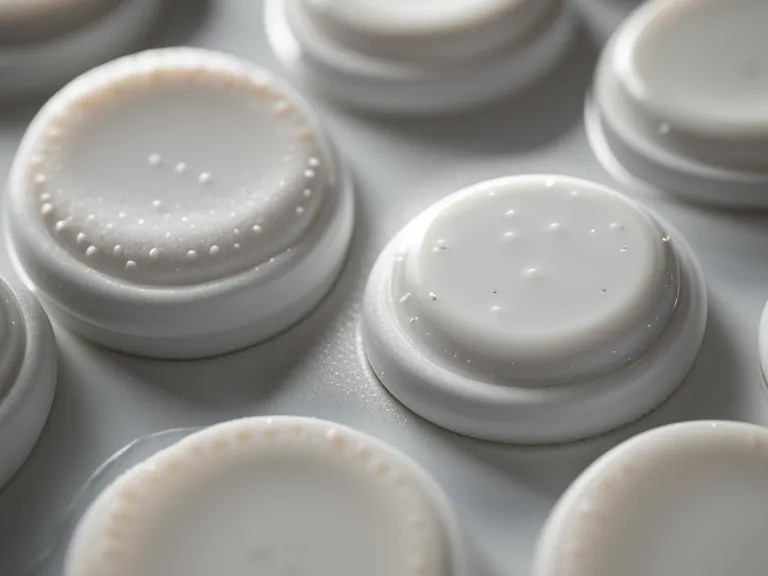
Each tablet lists 3.5 billion CFU (colony-forming units, in case that acronym doesn't ring a bell), which sounded impressive until I actually looked into what the number means. About halfway through letting one dissolve, there's a faint chalky film, almost minty at the edges, that shows up on your tongue — not unpleasant, just proof it hasn't fully broken down yet.
For a side-by-side against my other main pick, I put together a full BioDentex vs ProDentim comparison, since the two work differently enough that picking blind doesn't make much sense.
Timing turned out to matter more than I expected — apparently chugging a glass of water right after a probiotic can undo a chunk of the point, which is a whole separate conversation. If you travel often, it's also worth knowing that some strains don't hold up well to a hot suitcase or a slow security line, which turned into its own shelf-stability question once I started testing this on the road.
Not Everyone Should Make This Switch
None of this is a blanket recommendation, and that's worth saying plainly. Live bacteria aren't inert the way a mouthwash chemical is, so if you're managing a serious immune condition or you're currently under a doctor's care for something that compromises your immune system, loop your doctor in before adding any live-culture product to your routine. That's not a hypothetical caution — it's a real one.
When I wanted to compare strain profiles instead of switching outright, I tried ProvaDent for a stretch, mostly to see how a different formula affected morning breath specifically, which I wrote up separately in my Morning Breath Experiment.
Pairing a probiotic with xylitol seems to help more than either does alone, at least anecdotally — that combination deserves its own writeup rather than a throwaway line here.
There's also a full reseeding protocol for rebuilding what a harsh rinse strips out, which is more involved than swapping one product for another and deserves its own explanation rather than a summary here.
Judging Whether It's Actually Working
So how do you actually know any of this is doing something? I look for a handful of specific signs rather than vibes alone — there's a longer breakdown of what those colonization signals actually look like elsewhere on this site. I don't have a lab test sitting in my bathroom to confirm any of it; mostly it's a mouth that either feels calm or doesn't, and you get better at reading that over time.
Value is the other piece nobody talks about — you can work out a rough price-per-CFU comparison across brands if you want to get spreadsheet-nerdy about it (I won't throw numbers around here without walking through the math properly, though).
Judgment-wise, I've settled on a simple filter: does my mouth feel calm by the end of the day without a single rinse, and does that hold up even after coffee or a workout? If yes, whatever I'm using is doing its job. If not, it's back to the cabinet of half-tried bottles.
Where I Landed
Circling back to where this started: ProDentim has stayed my default, mostly because it required the least fuss to stick with day to day, and if gum sensitivity is more your specific concern than general balance, my BioDentex review covers that angle in more depth.
Either way, the real shift isn't about which bottle you buy — it's dropping the idea that a stronger burn means a cleaner mouth. The exact ProDentim protocol I've stuck with is linked right there if you want to see it, but the bigger point holds regardless of which product you pick: feed the ecosystem instead of torching it.