
Seven hundred. That's roughly how many species of bacteria the NIH's Human Microbiome Project has counted living in a typical oral microbiome, and none of them get a vote before a bottle of antiseptic mouthwash wipes out a good share of that population along with the two or three troublemakers actually responsible for bad breath. Swapping the rinse for an oral probiotic isn't about a stronger kill — it's closer to reformatting a hard drive to fix one corrupted file: technically it solves the immediate problem, but you lose everything else that was quietly doing useful dental-health work underneath it.
This isn't a diary of the whole transition. It's the mechanics: how the swap actually works, what changes day to day, and where a traditional rinse still earns a place in the routine.
Why Mouthwash and Oral Microbiome Probiotics Can't Run at the Same Time
A lot of people try to do both — swish with something antiseptic, then pop a probiotic right after, like a chaser. It doesn't work, and the reason has nothing to do with willpower. Alcohol-based rinses are built to keep killing bacteria for hours after you spit them out, so a lozenge full of live Streptococcus salivarius dropped in right afterward is basically dead on arrival. Which specific strain to pick — one labeled K12, one labeled M18, or something else entirely — is a genuinely deep rabbit hole on its own, deep enough that I'm not going to pretend I can do it justice in a couple of sentences here. What a single dose of mouthwash actually does to that population, minute by minute, is a bigger question too; the short version is that it doesn't discriminate between the residents you want and the ones you don't. And whether the resulting mix counts as properly balanced afterward is its own can of worms — probably deserves a more careful definition than "my breath doesn't smell anymore."
The Swap, Step by Step
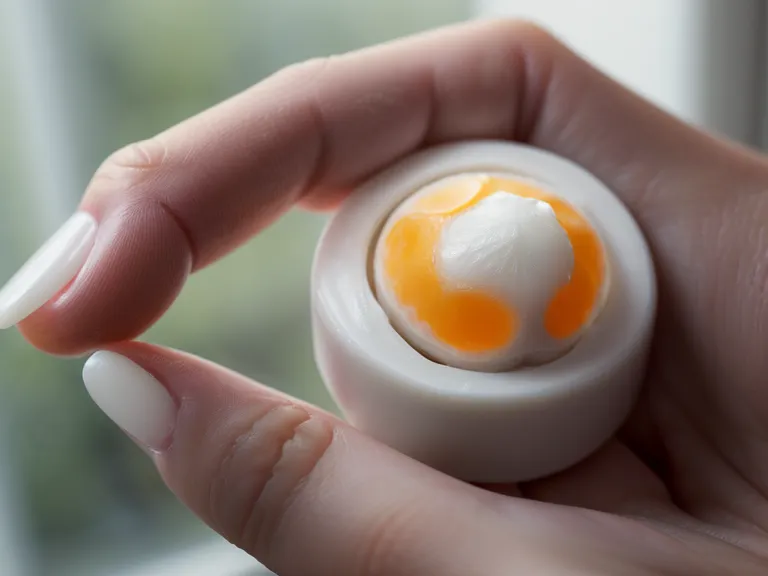
The mechanics themselves are almost boring in how simple they are. Stop the antiseptic rinse entirely, not just skip it before the lozenge but drop it from the rotation for the whole day. Pick a product with a clearly stated dose (most land somewhere in the low billions of CFU) and let it dissolve slowly instead of chewing it, since it needs sustained contact to do anything. Take it at a point in the day when you're not about to eat, drink, or brush right afterward — the exact timing relative to water and food is a finer detail with its own full write-up elsewhere, but the short version is that rinsing it straight down your throat defeats the purpose. Some people also follow a longer, staged reseeding plan over a set stretch if they want more structure than "take one and see what happens," which is worth reading separately if that's more your style than mine.
If you want the fuller version of how I approached the transition itself, I wrote a longer piece on reforesting my mouth after a lifetime of scorched-earth mouthwash that covers that ground in more depth. One side effect worth flagging here: cutting the alcohol out tends to leave your mouth noticeably less dry by mid-afternoon, which matters if you already deal with anything like Xerostomia — less a cure than a side benefit of removing whatever was drying things out in the first place.
A coworker of mine, Kenji, spent two days ribbing me about dissolving lozenges mid-meeting before he started asking real questions by the third day. He's been quietly running his own short version of this ever since, though he won't admit it if you ask him directly. In seven years of buying whatever new lozenge or spray turns up on a shelf — including some odd ones stocked at Central Market on North Lamar — I've noticed the price-per-CFU math varies a lot more between brands than the marketing suggests, though working that out properly is its own spreadsheet exercise. Shelf stability is worth a thought too if you travel with this stuff: some formulations hold up to a hot car or a checked bag far better than others.
Heavy coffee drinkers run into a slightly different version of this problem, and I put together a separate rundown on best oral probiotics for coffee drinkers if that's closer to your situation. Picking between specific formulas is its own comparison, too — I broke down BioDentex vs ProDentim separately if you want brand-level detail instead of the general mechanics covered here.
How Do You Actually Know It's Working?
Not by smell, which throws people off at first. We've been trained to treat a clean mouth as a blast of mint or wintergreen, and a probiotic routine gives you neither — it settles at neutral, which can feel like nothing happened at all. The check I actually trust is more physical than olfactory: sometime in the early afternoon, sitting at my desk, I'll run my tongue along the back molars, the ones that usually pick up a filmy coating by then, and on a day the routine is holding they feel slick instead of fuzzy, almost freshly brushed. It's not a lab test, and I wouldn't build a whole conclusion on one afternoon of it, but it's consistent enough that I trust it more than how my breath smells on waking. There are more formal ways researchers judge whether a strain has actually colonized versus just passed through, and that's a more rigorous conversation than a desk check can offer — worth reading if you want real criteria instead of my anecdotal version.

One Approach That Didn't Pan Out
Before settling into the lozenge routine, I tried oil pulling with coconut oil every morning for thirty minutes, on the theory that swishing fat around would pull out whatever the rinse used to kill chemically. Thirty minutes is a long stretch to spend standing at the sink with a mouthful of oil doing nothing else useful, and after sticking with it for a good while, I couldn't point to a single measurable difference it made beyond what the probiotic routine was already covering on its own. There may be a version of oil pulling that works better than mine did, done differently or for a different reason, but as a substitute for what a probiotic actually does, it mostly cost me half an hour before breakfast.
When a Rinse Still Earns Its Spot
None of this means mouthwash belongs in the trash. If a dentist tells you to use one after a procedure, or you're dealing with an active infection, that's not the moment to prioritize a bacterial population you're otherwise trying to protect — follow what a professional actually recommends for your specific situation, especially if you already have gum issues. Reach for it, too, on a day you genuinely need the fastest fix available and can restart the probiotic the next morning; the ecosystem approach is patient by design, and patience isn't always the assignment. Some people layer xylitol in alongside their probiotic, on the idea that it starves the bacteria causing problems while feeding the ones that don't — plausible, and outside what I tracked closely enough to vouch for personally.
A reader named Tomás, who emails progress updates most months from Phoenix, changes exactly one variable at a time before drawing any conclusion — dose, timing, or brand, never more than one in a given stretch. It's more discipline than I manage most days, but it's closer to the right way to learn something real from this instead of just guessing. That's really the whole method underneath the swap: stop assuming a stronger chemical automatically means a better outcome, and pay attention to what's actually happening in your mouth instead of what it's supposed to feel like.