
Floss held up to the bathroom light, turning it slow, checking for the thread of pink that used to show up there without fail. Nothing. Just white thread and the ordinary smell of soap. The window over the sink was cracked two inches against the early Austin traffic noise, and nothing in my mouth stung the way it used to, which used to be the entire point of my routine. That absence is the easiest piece of evidence I've got for a theory that undoes almost everything I was taught about what a clean, healthy oral microbiome is supposed to feel like.
The theory goes like this: a healthy mouth is not a sterile mouth, and most dental hygiene advice still operates like the enemy is anything alive. My dentist was the one who tipped me off, mentioning almost in passing that my aggressive rinsing habit was probably killing off the bacteria I actually wanted to keep. That comment turned into a genuine biohacking obsession: reading ingredient labels during lunch breaks, treating my own mouth like a legacy system I was slowly patching instead of rewriting from scratch. Oral probiotics became the centerpiece of that experiment, not because they're trendy, but because nothing else addressed the actual problem.
The Sterile-Mouth Myth Dental Hygiene Still Sells
Here's the misconception, stated plainly: kill enough bacteria and you end up with a healthy mouth. It's the logic behind every rinse that promises a percentage — 99.9% of germs, as if your mouth were a crime scene that needed sanitizing rather than an ecosystem that needed tending. Picture a garden with a few weeds in it. Nobody sane responds by soaking the entire yard in industrial herbicide twice a day. You'd kill the weeds, sure, but you'd also kill everything with roots deep enough to hold the soil together, and you'd be left with dirt that grows nothing at all for a long while after.
Your mouth carries something like 700 different species of bacteria, second in diversity only to your gut, and most of them are neither friend nor foe — they're just residents doing resident things. Antiseptic rinses don't have a whitelist. They take out the species causing bad breath right alongside the ones quietly managing your mouth's pH and keeping your gums in a decent mood. Exactly what a balanced mix of those residents looks like, and what tips it out of balance, is a deep enough question for its own dedicated post — this one's about the myth, not the ledger.
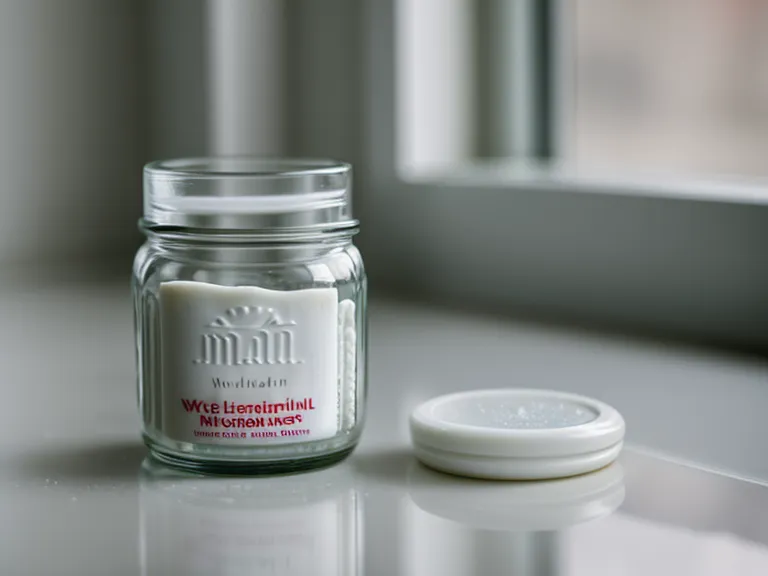
Killing Everything Doesn't Make a Mouth Healthy
There's a specific threshold where things tip from fine to not fine — dentists talk about it in terms of a 5.5 pH mark, below which your enamel stops being happy. I won't pretend I can explain the full chemistry here (that's a much drier post than this one), but the short version is that beneficial bacteria help keep your mouth from tipping past that mark, consuming sugars before they turn into something more acidic. Nuke that population twice a day with an alcohol rinse and you're not protecting your enamel, you're removing one of the things that was protecting it. It's the same mistake as scrubbing a good cast iron pan down to bare metal every time you cook in it — you're stripping away the exact layer that was doing the work.
Meet the Bacteria Actually Doing the Work
Not every probiotic is built for this job, which is a lesson that took me embarrassingly long to learn. A gut-health capsule doesn't help your mouth any more than a car radiator benefits from a kitchen filter. What actually colonizes up there is a specific strain family, Streptococcus salivarius, adapted to live in the mouth and throat rather than just pass through on its way to your intestines. A couple of well-studied strains within that family come up constantly, and picking between them is genuinely its own rabbit hole — enough that it gets an entire separate post instead of a paragraph crammed in here.
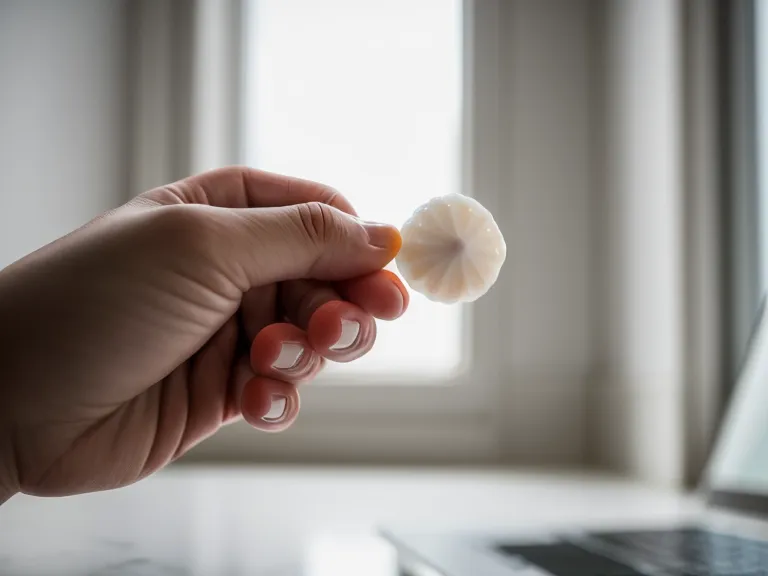
Before I found probiotics, I tried the mechanical route — a stainless steel tongue scraper, dragged across after every single meal, on the theory that if bacteria were the problem I could just physically remove them. It didn't work. If anything my breath got worse by early afternoon, since scraping off the surface film did nothing about what was happening underneath, and doing it that often just irritated tissue that didn't need irritating. The lozenge approach felt different from the first try: sitting at my desk, a chalky, faintly sweet tablet dissolving under my tongue while I stared at a screen, wondering if I'd just paid for expensive candy. I hadn't. Whatever was happening felt less like a chemical jolt and more like feeding something that was already supposed to be there.
A reader named Nadia, who apparently has a palate sensitive enough to pick up flavor notes I can't detect at all, once messaged me insisting a lozenge tasted faintly of green tea where I got nothing but chalk. I believe her. Taste perception on this stuff is wildly individual, which is one more reason I'm cautious about ranking anything purely on flavor.
Can You Run Probiotics and Antiseptic Mouthwash Together?
Short answer: not really, not if the mouthwash is the scorched-earth kind. Taking a probiotic in the morning and then blasting an antiseptic rinse before bed is close to funding a construction project and demolishing it every night before the concrete sets. The transition itself is its own adjustment — swapping a rinse habit for a probiotic habit trips people up in ways I've covered in more detail elsewhere — but the short version is that timing between the two matters as much as which products you pick, and something as simple as what you drink right before bed can undermine the whole effort in ways worth reading up on separately.
My neighbor Luz, who grows more herbs on her patio than she knows what to do with and keeps track of which ones the stray cats around here refuse to go near, has a theory that most of biology is just landlord-tenant relations if you zoom out far enough. I think about that more than I'd like to admit whenever I catch myself reaching for anything labeled antiseptic. The mouth doesn't need to be emptied out — it needs tenants who behave.
The Rule I Actually Follow Now
The rule I've settled on is simple enough to actually follow: stop treating antiseptic strength as a proxy for a healthy mouth, and start treating your oral microbiome the way you'd treat any ecosystem you actually wanted to keep — feed it, don't carpet-bomb it. That means choosing a rinse that supports pH instead of nuking everything, giving probiotic strains room to establish rather than resetting the environment every twelve hours, and accepting that clean will start to feel different: less like a chemical jolt, more like nothing happening at all, which is honestly the whole point.
What that balance actually costs, mechanically, is a longer conversation than this post has room for. There's plenty to say about whether a given product is worth the money once you compare CFU counts against what you're paying, whether xylitol makes a meaningful difference alongside a probiotic strain, or how to spot the small, specific signs that colonization is actually taking hold instead of just hoping. I keep a full week-by-week reseeding protocol for people who want the structured version of all this; this post is only about the mindset switch that has to happen before that protocol means anything.
If you want to get more precise about ingredients instead of taking my word for any of it, I've also written about how to read oral probiotic labels like a tech product spec sheet, which is the more analytical companion to everything above. And if your job or travel schedule means your routine falls apart every time you leave your own bathroom, the best shelf-stable oral probiotics for frequent travelers and digital nomads is worth a look before you write off the whole approach.
None of this is medical advice, and if you've got existing gum issues, loop in an actual dentist before you change anything about your routine. But the underlying myth — that a mouth has to sting to be healthy — is one I'm now fairly confident is just wrong, floss check and all.