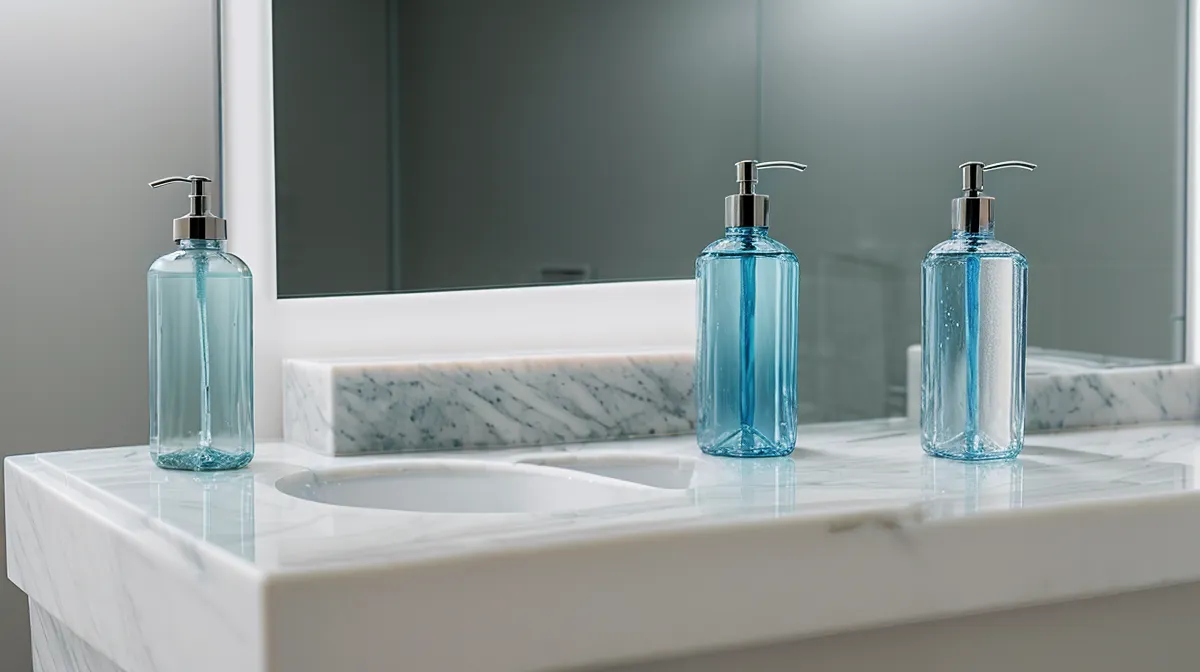
The sting from that blue rinse might feel like proof it's working, but it's usually just proof you've cleared out bacteria your mouth needed to keep things running. That question is basically why I started digging into oral probiotics, microbiome health, and what a smarter dental hygiene routine should actually involve, instead of just grabbing whatever bottle promised the strongest burn.
Quick disclosure before anything else: this site runs on affiliate links, so if you buy something through one of them, I earn a commission at no extra cost to you. Not a dentist, not a microbiologist (just someone who reads too many ingredient labels on lunch breaks) — the products below got tested the same way everything else on this site does, by actually using them and paying attention to what changed.
Why Mouthwash and Oral Microbiome Health Don't Automatically Get Along
Alcohol-based mouthwash isn't picky about what it kills. It's built to knock down bacteria across the board, and that blanket disruption is really the entire reason a switch toward oral probiotics gets recommended in the first place — you're not targeting one troublemaker, you're resetting an entire habitat and hoping something better moves back in.
Picture clear-cutting a garden bed because you spotted three weeds. The weeds are gone, sure, but so is everything else that was holding the soil together, and now the ground sits open for whatever shows up first, which is rarely the plant you actually wanted. That's roughly what a daily chemical rinse does to the ecosystem living on your teeth, tongue, and gums.
Oral microbiome balance — not maximum bacteria, not zero bacteria, just the right mix holding its ground — is a bigger topic than one article can cover properly, but it's the frame I now run every product decision through before buying anything.
When Everything Gets Cleared Out at Once
Nature doesn't leave a vacant lot vacant for long. Wipe out a mouth's whole bacterial population and something moves in to fill the gap, usually whatever's fastest and least picky about its neighbors, not necessarily whatever's good for you. That's the part standard mouthwash marketing never mentions.
A friend of mine — the CrossFit-six-mornings-a-week type — asked me about all this over coffee near Central Market on North Lamar, and it struck me how much of dental hygiene is inherited ritual rather than anything either of us had actually looked into. Everyone's got a routine. Almost nobody can explain why.
Build Your Switch Around Four Checkpoints
First, stop the wipe-it-all-out cycle before adding anything new. Cutting back on the alcohol rinse is the actual first move, not an afterthought you get to later — everything downstream depends on giving bacteria room to exist again in the first place.
Second, read the label like it matters, because it does. CFU counts and specific strain names started to matter more to me than marketing copy once I understood that strain selection is genuinely its own rabbit hole, and there's also a whole cost-per-CFU math problem hiding in these product pages that's worth working through before buying the fanciest bottle on the shelf. I started keeping the Mouthwash Paradox in mind here too, since the tradeoffs aren't as simple as "just stop using mouthwash" — and ProDentim became the one I kept coming back to, mainly because its label was easier to make sense of than most of the competition. For the long version of how that testing actually went, my full review of what actually worked covers the rest of the shelf.
Third, pay attention to timing, because it turned out to matter almost as much as the product itself. When you take something, and what you eat or drink right before or after, changes whether it gets a real shot at sticking, and that's a big enough topic to deserve its own breakdown rather than a paragraph here. Shelf stability is the other wrinkle nobody warns you about — some strains need refrigeration to survive, which becomes a real headache the first time you try to travel with one. I rotated through ProvaDent and BioDentex during these timing experiments, mostly to see whether taking them at a different point in the day changed anything noticeable.
Fourth, give it a real runway instead of judging it after a few days. If you want a structured version of this rather than improvising the way I did, there's a longer reseeding protocol worth following step by step. None of it works fast. Reforesting my mouth took patience, closer to tending a sourdough starter than wiping down a counter, and expecting overnight results is where most people give up too soon.
The 'More Bacteria Is Better' Assumption Has a Limit
None of this is a free-for-all, though. Anyone who's immunocompromised, undergoing serious medical treatment, or otherwise under a doctor's care for something significant shouldn't treat oral probiotics as an automatically safe add-on — introducing more bacteria, even the helpful kind, is a conversation for an actual medical professional, not a decision to make off a blog post. That's not excessive caution; it's just outside what any home experiment can responsibly tell you.
Tracking Signals, Including the One Experiment That Flopped
Not everything I tried earned a permanent spot in the routine. Swapping to an SLS-free fluoride toothpaste was the fix I was most confident about going in, and it did basically nothing for the fuzzy-teeth feeling I was trying to chase away — a reminder that the toothpaste aisle and the microbiome conversation are two different problems wearing similar packaging.
The clearest signal for me wasn't dramatic. It showed up as running my tongue over my back molars at my desk one afternoon and noticing they felt slick instead of fuzzy, which sounds minor until you realize it's the tell I trust more than anything printed on a label. That's really just one entry on a longer list of colonization signals worth tracking if you want to know whether any of this is doing something, or you're just out the cost of another bottle.
A handful of the better formulations pair their strains with xylitol, and the two showing up together on so many ingredient lists isn't a coincidence, though I'll admit I couldn't walk you through the full reasoning without oversimplifying it. That pairing is worth understanding on its own before assuming every bottle with "xylitol" printed on it is doing the same job.
My Dental Hygiene Routine Now
These days ProDentim is the one that stays in regular rotation, mostly because it's been the most consistent for that squeaky-clean feeling right after a cleaning, without the alcohol burn. Gums look pinker than they used to, breath sits neutral instead of swinging between minty and stale, and there's no missing that old sting.
Anyone curious about the fuller story can read about the nighttime ritual that ended up replacing a mouthwash habit for good — it's a smaller, quieter routine than the blue-rinse version, and that's kind of the point.