
A swimming pool wants zero life in it, while a garden wants the opposite — cram as much into that dirt as you can and it typically gets healthier, not worse. Most of us brush and rinse like we're managing a pool: kill the count down to nothing, admire the silence, repeat tomorrow. But the ecosystem actually living inside your mouth behaves far more like the second thing, and mixing up which one you're managing is, in my experience, the single biggest misunderstanding behind most oral microbiome advice — probiotic strains included. I'm not a dentist or a microbiologist, just someone whose dental health curiosity turned into a biohacking habit I can't quite put down, but this particular mix-up is one I can spot from across the room now, mostly because I lived inside it for a long stretch myself.
The misconception goes something like this: bacteria cause bad breath and gum trouble, so a rinse strong enough to wipe out bacteria wholesale must be the healthier habit. It's tidy logic. It's also backwards. The oral microbiome isn't a stain you scrub off a countertop — it's a packed, competitive community, and a healthy version of it looks less like an empty room and more like a full one where the right tenants have already crowded out the troublemakers. Empty the room completely and you haven't fixed anything. You've just left the door open for whoever shows up next, and that next arrival rarely asks permission.
Balance is the actual target here, not zero. What that balance looks like in practical terms, and which specific shifts actually matter, is a deep enough rabbit hole that I've written a whole separate piece on it. For now I just want this myth sitting out in the open, because everything else in this post only makes sense once it is.
Sterile Isn't the Same as a Healthy Oral Microbiome
Picture a fish tank instead, if pools and gardens aren't your thing. Nobody dumps bleach into cloudy tank water and calls it maintenance — you'd kill the fish along with the algae. Instead you adjust the filtration, watch the chemistry, and let a stable population of the right microbes keep the water clear on its own. Your mouth runs on the same logic, just with saliva instead of water and enamel instead of glass. Treat it like a surface that needs sterilizing every twelve hours and you're fighting the system instead of working with it.
None of this means bacteria are automatically fine just because they're bacteria. Some absolutely cause problems. The point is narrower than that: the fix isn't zero, it's the right mix, and most store-bought rinses have no way of telling the difference between a troublemaker and a tenant you actually want to keep around.
Why Can't a Rinse Tell Good Bacteria From Bad?
Because chemically, it doesn't have to. An alcohol-heavy rinse works like a blunt instrument — it lowers the population across the board, full stop, with no mechanism for sorting out who's causing trouble and who's keeping the peace. That's a fine strategy if your only goal is a short-term drop in odor-causing bacteria before a meeting. It's a bad long-term strategy if you're hoping for a mouth that regulates itself without twice-daily chemical intervention.
I fell for a cousin of this myth myself, before probiotics ever entered the picture. For a stretch I was water flossing with a Waterpik cranked to the highest pressure setting, on the theory that if bacteria were the enemy, more force had to be the answer. My gums were unhappy about it within days. My breath was completely unaffected. The only measurable outcome was how much water ended up on the bathroom mirror — a good reminder that force and precision are not the same skill, and that a lot of oral health advice quietly assumes they are.
Swapping that kind of rinse for something gentler only works, though, if you understand just how thoroughly it was disrupting things in the first place — and that's a longer explanation than fits here, so I'll leave it as a flag rather than a full detour.
The Central Market Aisle That Changed My Shopping List
Somewhere around the fermented foods section of Central Market on North Lamar, it clicked that I'd been thinking about this backwards in more than one aisle of my life. Kombucha, sauerkraut, the little jars of miso tucked next to the tofu — none of that food works by killing everything and starting from nothing. It works by cultivating a specific population and feeding it well. Standing there with a pack of xylitol gum in one hand, I realized I'd been applying exactly zero of that logic to my own mouth.
Xylitol turned out to be a bigger piece of this than I expected, mostly because it seems to make life harder for the bacteria you don't want while barely inconveniencing the ones you do — pairing it with a probiotic strain rather than picking one or the other is its own topic I've gone deep on elsewhere.
Testing Probiotic Strains Like You Mean It
My college friend Asher Goldblatt, who's in Seattle now working in health-data analytics, is the reason I stopped testing three things at once and calling it science. Asher won't change a single variable in his own routine without running what he calls a five-day washout first — no new supplement, no swapped toothpaste, nothing, just a clean baseline before the next change goes in. Watching him do this for something as low-stakes as a sleep tracker made me realize I'd been rotating probiotic bottles so fast I had no idea which one, if any, was doing anything.
Strain selection matters more than most people assume, too — Streptococcus salivarius K12 and M18 get compared constantly, and picking between them is genuinely its own decision rather than a coin flip, which I've broken down separately.
Rebuilding a wrecked oral microbiome isn't a switch you flip either; it's closer to a staged process with its own timeline, and I'd rather send you to the long version of that than compress it into a paragraph that undersells it. Some of the earlier trial-and-error that led me here is written up in my Austin bathroom cabinet chronicles, if you want the blow-by-blow of which products actually earned a permanent spot and which got quietly retired.
What a Reader in Chicago Pointed Out
Brendan Shea, a regular commenter on this site who manages a dental office in Chicago, is the reason I stopped thinking about probiotic products purely in terms of strains and CFU counts. He pointed out, correctly, that a product's staffing and supply chain matter just as much as its formulation — a great strain means nothing if the batch sitting on a shelf for months wasn't handled the way it needed to be.
That conversation is part of why shelf stability matters so much if you travel or just have an inconsistent fridge situation — some strains hold up fine at room temperature and others really don't, and I've tested that split directly in another post.
It's also worth thinking in terms of CFU count against price rather than price alone, since two bottles that look similarly priced on a shelf can differ enormously once you actually do that math - again, a comparison I've run in detail elsewhere rather than here.
So How Do You Know Any of This Is Working?

Here's the honest answer: mostly you don't, until you stop looking for a dramatic sign and start noticing small textural ones instead. One afternoon at my desk, mid-scroll through a spreadsheet, I ran my tongue along a back molar out of habit and the texture caught me off guard. Slick, not the faint fuzzy coating I'd gotten used to feeling by that point in the day. Nothing minty happened. Nothing burned. It was just quieter than I expected, in a way that felt more like progress than any tingling ever had.
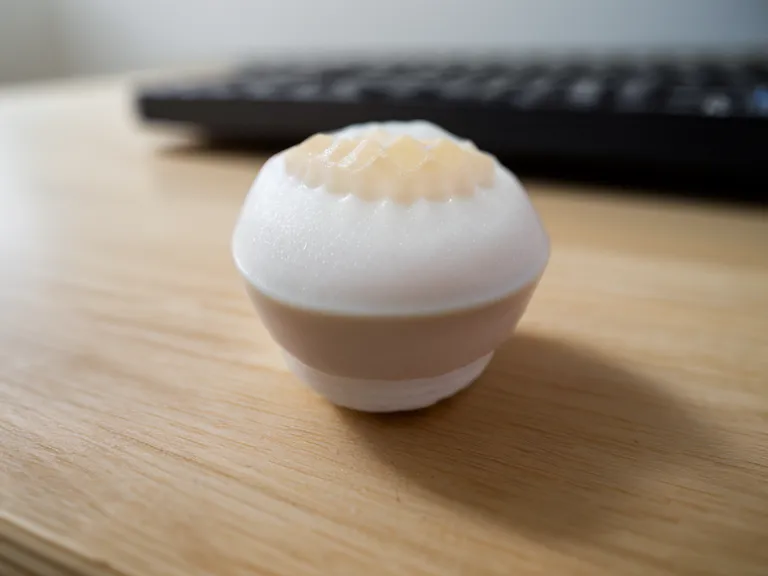
There are more reliable signals than one slick molar, to be fair, and I've catalogued the fuller list of what actually indicates a strain is colonizing rather than just passing through in another post. One small thing I do pay attention to now is the texture of the lozenge itself, that last gritty-smooth stretch right before it fully dissolves under your tongue, which somehow makes the whole habit feel less like swallowing a pill and more like waiting out a small, deliberate chemistry experiment.
Timing trips people up more than they expect, too - rinse with a big glass of water right after taking a lozenge and you can undo a meaningful chunk of what you just did, which is a mistake specific enough that it earned its own full explanation on its own page.
None of this requires an elaborate system to act on. The correction is smaller than that: stop treating your mouth like a surface that needs sterilizing, and start treating it like a population that needs managing instead. That one shift changes which products make sense, which habits work against you, and what "working" should even look like day to day. If you're still reaching for the strongest rinse on the shelf because you assume strength equals health, that's the assumption worth dropping first — everything else follows from there.
The mouth you're trying to fix with more antiseptic is very likely not broken in the way you think it is. It's just unbalanced, and balance responds to patience and the right inputs, not to force.