My tongue sweeps across my front teeth before I'm even fully awake — no film, no fuzzy grit to scrape off, just smooth enamel — and some mornings that little check still catches me off guard, because for most of my adult life it came back rough every single time. A few hours later I'm drying off poolside at Barton Springs, and it occurs to me that this daily habit is basically a data point in a comparison I never planned to run: two completely different ways of dealing with a wrecked oral microbiome, tested against each other through months of actual product testing instead of picked on faith, and judged here on personal experience rather than anything you'd find in a lab report.
Here's the short version, since you didn't come here for suspense: oil pulling lost. Badly. A daily oral probiotic, the kind you let dissolve instead of swallow, won on every measure I bothered tracking, and the gap between the two wasn't subtle. That doesn't mean oil pulling is useless for everybody, and it doesn't mean every bottle on a shelf works the same way. But as a straight head-to-head, it wasn't close.
Quick disclosure before we get further into it: this site runs on affiliate links, including a few below, so buying through one earns me a commission at no extra cost to you.
Oil Pulling vs. Oral Probiotics: The Comparison I Didn't Plan to Run
For thirty minutes every morning, I swished a spoonful of coconut oil around my mouth before I'd even looked at my phone, because half the wellness corners of the internet swore it would pull toxins and clean up my oral ecology better than anything sold in a bottle. I kept at it morning after morning. My jaw ached. My mouth tasted like a hardware store. And as far as I could tell, nothing about my actual oral microbiome changed, just the same fuzzy film by early afternoon, same breath I had to manage, same gums running a little too pink-red for comfort.
Why Coconut Oil Never Touched My Oral Microbiome
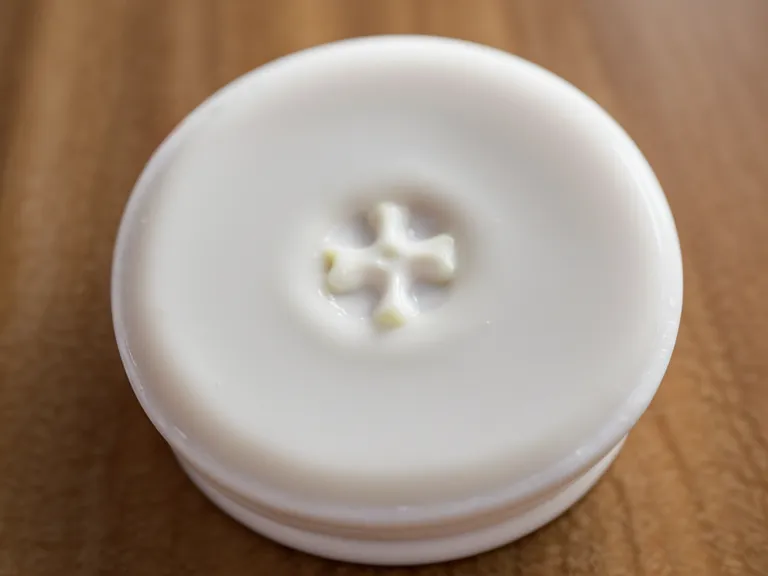
Swishing oil around your mouth is mechanical — it can loosen some surface debris, sure, the same way rinsing a dirty dish with plain water does something. But it doesn't introduce anything new to the ecosystem already living on my teeth and gums. It's subtraction, not addition. Around the time I gave up on the oil, a coworker on my team, Kenji Okafor, who won't accept a claim without a control group, pointed out (not gently) that I'd never actually tried an approach that added bacteria instead of just scrubbing at the ones already there. That needling is basically why I ordered ProDentim — a chewable tablet rather than a capsule, since chewing keeps the strains sitting on your gums and tongue instead of riding straight to your stomach.
The change wasn't dramatic at first, and I won't pretend otherwise — a chewable tablet is not a light switch. But eventually the sticky biofilm that used to build up on my teeth by mid-afternoon stopped showing up, and that wake-up tongue check started coming back clean more mornings than not. Thirty minutes of coconut oil a day never got me anywhere close to that. A few seconds with a chewable tablet did.
I've written elsewhere about treating this like reforesting my mouth rather than sterilizing it, and the oil-versus-tablet comparison is really the same idea in miniature: one approach strips things down, the other plants something that can take root. Only one of those did anything I could actually feel. None of this settles which specific strain to buy, either — the debate over something like S. salivarius K12 versus M18 is its own rabbit hole I've mostly stayed out of in this piece. And how mouthwash tips an oral microbiome's balance out of whack in the first place is a whole separate topic I've covered elsewhere. For this particular comparison, all that mattered was subtraction versus addition, not which flavor of addition won.
ProDentim, BioDentex, or ProvaDent — Which One Earns the Shelf Space?
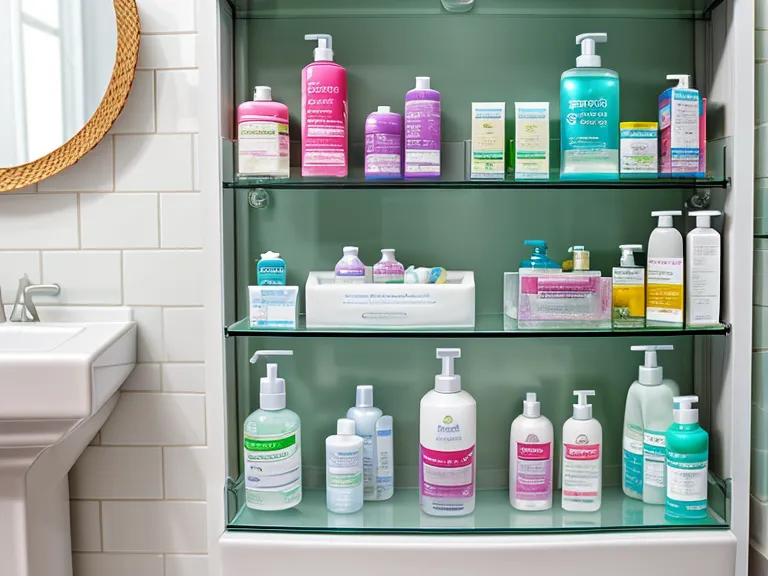
Once probiotics won the bigger argument, the real comparison started, because my actual bathroom cabinet — the one over the pedestal sink two steps from my desk — is not exactly a controlled lab environment. It's cluttered with half-used bottles, a whiteboard leaning against the wall with brand names scrawled in dry-erase marker, and sticky notes stuck to the mirror where I jot down lot numbers so I don't lose track of which bottle is which. Twisting one of those safety caps open before the sun's fully up has become such an automatic motion that I only notice the quiet click-clunk when it's missing — like the morning I reached for a bottle of BioDentex during a stretch when I'd run out of my usual stuff and didn't want to break the routine.
At this point my bathroom cabinet is a graveyard of research, and I've gone deep on the specific differences in a piece I called BioDentex vs ProDentim if you want the granular version. The short version here: BioDentex is the more budget-friendly of the two, and it held the line well enough as a bridge supply, though I never felt it fully matched ProDentim's consistency. Neither bottle lists a price-per-CFU breakdown on the label, which is its own frustration if you're trying to compare value the way you'd compare unit pricing at a grocery store. Neither one pairs itself with xylitol the way some other formulas apparently do, either — that combination is supposedly its own layer of synergy, though it's not something I tested directly here.
Later in the comparison I brought in a third option, ProvaDent, mostly out of curiosity about whether a different strain lineup would shake anything loose. It didn't unseat ProDentim as my daily pick, but it worked fine as a maintenance option once the bigger shift had already happened — a different problem than the one you're solving in the first days after dropping mouthwash cold turkey, when the disruption to whatever was living in your mouth is at its worst. There's a whole reseeding protocol some people follow step by step to smooth that transition out; I didn't run it that formally, but I understand why it exists.
Four Mistakes That Set Me Back
Not every mistake in this comparison was about which product to buy. Twice I undid my own results without realizing it. Once, I dissolved a tablet and then ate breakfast about ninety seconds later, which almost certainly rinsed most of what I'd just built straight down my throat before it had a chance to attach to anything. I've since learned to leave a real gap before eating or drinking anything afterward. The second time was dumber: I used my old mouthwash the same night I'd started a new probiotic bottle, out of pure habit, half asleep, grabbing the wrong bottle off the shelf. That one probably wiped out whatever colony I was trying to establish before it even got going. Mouthwash and live bacteria are not exactly compatible, and running them back to back on the same night undoes the entire point. There's apparently a whole science of timing this around bedtime and how much water you've had beforehand that I only halfway respect, and both mistakes above are basically amateur versions of that same problem.
The third mistake was just a shopping error: I clicked the wrong listing once and ended up with a gut-targeted probiotic capsule instead of an oral lozenge, and I didn't catch it until the bottle arrived. A capsule like that is designed to get past your stomach acid before it does anything, not to work in your mouth. It did nothing for my teeth or gums, because it was never built to. The fourth was an Austin-summer problem: I left a bottle marketed as shelf-stable in my car during a grocery run that turned into a longer errand than planned, and by the time I remembered it, the cabin had been baking for hours (Austin in July doesn't do gentle). "Shelf-stable" apparently has limits, and a hot car is probably past them.
So Which Approach Actually Wins?
A reader named Tomás Vega, who emails me monthly updates from Phoenix, tracks his own results in a Google Sheet he refuses to simplify no matter how many times I suggest fewer columns, and even his stubbornly detailed data shows the same pattern mine did: some signs of things working show up early, some take much longer to show up at all, and a couple never show up over an entire run no matter how consistent you are. That's arguably the most honest answer this comparison can give — probiotics beat oil pulling by a wide margin in my case, but a wide margin still isn't a guarantee, and it definitely isn't instant.
If I'm handing someone a straight recommendation: pick oil pulling, or any other subtraction-only method, only if you've already got a healthy baseline and just want a low-effort habit layered on top — it won't rebuild anything that's genuinely out of balance. Pick an actual oral probiotic if your starting point looks anything like mine did, film by early afternoon, breath you have to manage, gums that run a little too red. Between the bottles themselves, ProDentim is still the one I default to and recommend first, and BioDentex is the one I point people toward when budget is the deciding factor and they just want a reasonable place to start.
What Seven Years of Doing This Hasn't Settled
Seven years into treating my own mouth like an ongoing experiment, I still don't think of myself as anything close to an authority — just a guy in South Austin who reads too many ingredient labels and keeps a whiteboard he probably shouldn't (it currently has four brand names on it and an arrow that no longer makes sense to anyone but me). I still keep a backup bottle around for exactly the situations where habit fails me, and you can read the full ProDentim backup habit here. The coconut oil still sits in my cabinet, half a jar slowly going solid, mostly because throwing it out felt like admitting defeat a little too directly.
Talk to an actual professional before you overhaul anything about your own routine — I'm not one, and my results are mine, not a guarantee of yours. But if you're weighing thirty minutes of swishing oil against thirty seconds of letting a tablet dissolve, the comparison isn't nearly as close as the wellness blogs make it sound.