Standing in my bathroom late one evening, I stared at a bottle of neon-blue mouthwash, haunted by my dentist's casual remark that I was essentially 'napalming' my mouth's natural defenses. It was just after Thanksgiving in late autumn 2025, and while the rest of the world was worrying about holiday leftovers, I was having a crisis of conscience regarding my oral hygiene. I had always been a 'burn means it's working' kind of guy, but that neon liquid suddenly felt less like a cleaning agent and more like a chemical spill. If my mouth was supposed to be a thriving ecosystem, why was I treating it like a kitchen counter that needed to be disinfected with bleach?
I’m not a dentist, a microbiologist, or a health professional of any kind. I’m just a guy who works remotely in tech here in Austin, which means I have a dual-monitor setup and way too much time to read ingredient labels during my lunch breaks. My transition from a guy with a clean desk to a man with a second monitor permanently displaying PubMed studies began that night. I learned that our mouths aren't just empty spaces; they are home to roughly 700 oral bacterial species. When you use high-alcohol rinses, you aren't just getting the 'bad' guys. You're wiping out the entire neighborhood, including the friendly residents that actually keep the peace.
The Tech Worker’s Guide to Oral Tending
Think of your mouth like a fish tank. If you’ve ever owned one, you know that if you scrub the glass too hard and change all the water at once, the fish die. Why? Because you’ve killed the beneficial bacteria that process the waste. My mouth was a neglected tank, and I had been the over-zealous owner dumping in chemicals to clear the algae without realizing I was making the environment toxic for the inhabitants. I spent most of early spring 2026 wondering why my quest for a sterile mouth was backfiring so spectacularly, leading to more sensitivity and a persistent dryness that no amount of Austin tap water could fix.
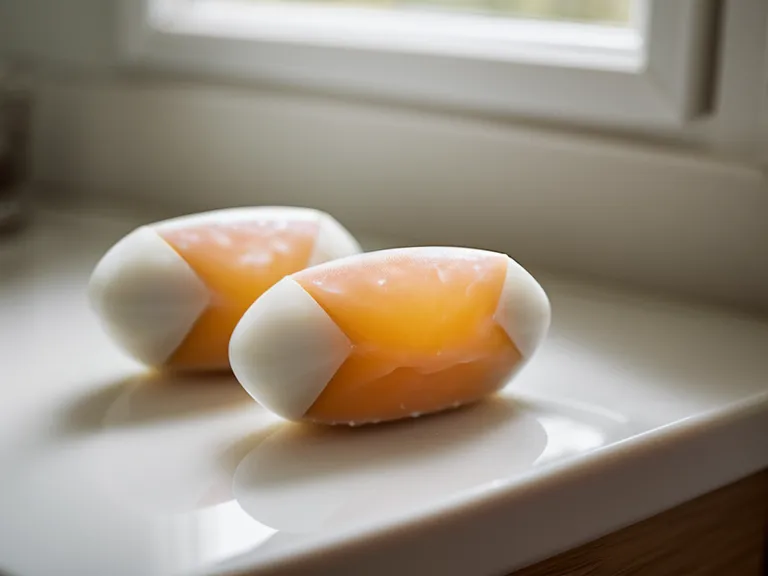
By early spring, I had fully committed to the 'Re-Wilding' project. I cleared out the alcohol-based rinses and replaced them with a nightly ritual of slow-dissolve lozenges. This was much to the confusion of my partner, who wondered why I suddenly stopped talking after 9 PM. You see, oral probiotics are typically delivered via lozenges or powders rather than capsules to ensure direct contact with the oral tissues. If you just swallow a pill, you're sending the troops to the stomach when the battle is happening in the gums. I had to let them sit there, colonizing the nooks and crannies like a sourdough starter taking hold in a warm kitchen.
I started focusing on specific strains of Streptococcus salivarius, specifically the K12 and M18 strains. These are the heavy hitters of the oral world, the kind of bacteria that act like a neighborhood watch. They don't just sit there; they actively produce substances that keep the less desirable microbes from setting up shop. I began to see myself as a high-tech landlord for three billion units of Streptococcus salivarius, and I hope they like the rent. My job was simply to provide the right environment—specifically maintaining a resting mouth pH between 6.7 to 7.3, which is the 'Goldilocks zone' for a healthy oral microbiome.
The Sensory Shift: Cicadas and Chalky Grit
The experiment wasn't always glamorous. There is a certain sensory reality to oral probiotics that the glossy ads don't mention. I remember sitting on my porch during a particularly warm evening, the chalky, slightly sweet grit of a dissolving lozenge as I sit on my porch, listening to the Austin cicadas. It wasn't the minty explosion I was used to, but it felt... intentional. It felt like planting seeds. I realized that my saliva was doing more than just keeping things wet; it contains the enzyme amylase, which begins the breakdown of starches before food even leaves the mouth. By nuking my mouth previously, I was likely interfering with the very first step of my digestion.
About six months in, I hit a turning point. I noticed a 'fuzz-free' sensation on my teeth that lasted even after a long day of back-to-back Zoom meetings and three cups of local coffee. In the past, by 4 PM, my teeth felt like they were wearing tiny sweaters. That 'fuzz' is often a sign of biofilm overgrowth. But now, the pellicle—that thin protein film that forms on tooth enamel within minutes after brushing—was being colonized by the 'good' guys I was introducing. Instead of a chaotic weed patch, my teeth felt like a well-manicured lawn.
However, I'm not here to tell you it's a miracle cure. Definitely talk to your own dentist before you start trying to re-engineer your mouth’s ecosystem, especially if you have underlying issues. I’m just a guy with a bathroom cabinet full of half-used bottles, and I’ve had my share of failures. Some products were so chalky they made me gag; others felt like they were doing nothing at all. It’s a process of trial and error, much like trying to find the right balance of nitrogen in a garden bed.
The Trap of Uniformity
As I moved into the hottest part of July 2026, I stumbled upon a realization that isn't often discussed in the probiotic world. Chronic use of commercial oral probiotics may inadvertently inhibit the colonization of your own unique, protective commensal bacteria by creating an overly uniform oral microbiome. I realized that if I only supplemented with K12 and M18, I might be creating a monoculture. Just like a forest needs more than one type of tree to be resilient, our mouths need a diverse array of those 700 species to truly thrive.
I started backing off the heavy supplementation, moving to a more 'maintenance' style approach. I wanted to give my native bacteria room to breathe. By the time the hottest part of July rolled around, I realized what a year of testing oral probiotics taught my tech-brain about patience and the dangers of over-optimization. You can't force an ecosystem to grow faster than it wants to; you can only provide the conditions and then get out of the way. I stopped obsessing over every single strain and started focusing on the overall 'vibe' of my mouth—less dryness, better breath, and a general feeling of balance.
Looking Back at the Bathroom Cabinet Graveyard
By the end of summer 2026, my bathroom cabinet had become a graveyard of sorts—bottles of rinses I’ll never use again, and half-empty containers of various experimental powders. But the 'napalming' days are over. I’ve learned that my mouth isn't a kitchen counter to be disinfected; it’s a garden that needs tending. It’s a complex, living system that responds better to a gentle nudge than a sledgehammer. My lunch breaks are still spent reading studies, but now I’m looking for ways to support diversity rather than just forcing a single strain into the mix.
If you're thinking about making the switch, remember that it's a marathon, not a sprint. You're rebuilding a community that's been under siege for years. Give it time, watch the pH, and maybe listen to the cicadas while you let that lozenge do its work. Your mouth—and those three billion tiny tenants—will probably thank you for it. Just don't expect it to happen overnight, and don't be afraid to let your own unique bacterial 'weeds' grow alongside the prize-winning probiotics. Diversity is the goal, not a sterile, uniform perfection.