
Does Mouthwash Really Kill the Bacteria You Want to Keep?
A fish tank and a bathroom sink have nothing in common until you treat them the same way: dump in something that kills every living thing in the water, and you don't get a clean tank, you get a dead one. That's roughly what a daily alcohol rinse does to the oral microbiome, the community of bacteria living on your teeth, tongue, and gums whether you invited it or not. People ask me about this constantly once they find this site, usually right after Googling why their mouthwash routine and their bad breath seem to be getting worse at the same time, so here's the running list of questions I get most about mouthwash, probiotics, and what actually counts as useful oral health tips versus marketing noise.
The short answer to the first question is yes, and it's not really up for debate. Alcohol-based mouthwash doesn't distinguish between the bacteria causing your gum irritation and the bacteria quietly doing useful work nearby; it kills both, non-selectively, in the same rinse. Researchers who study this describe that broad-spectrum antimicrobial action as a plausible source of oral dysbiosis, meaning the whole bacterial community gets thrown out of balance, rather than treating it as some kind of precision fix. It behaves less like a scalpel and more like clearing an entire lot with a bulldozer because one tree had termites.
What 'Balance' Actually Means in Your Mouth

Balance is a word I use constantly on this site, so it deserves an actual definition instead of vibes. A balanced oral microbiome isn't a mouth with fewer bacteria in it — it's a mouth where dozens of species are competing for the same real estate on your teeth and gums, and the ones that keep your breath calm and your gums quiet are winning that competition most of the time. When one or two aggressive species get room to take over, because the mouth got wiped clean and the fastest colonizers moved back in first, that's dysbiosis, not diversity. Good bacteria tend to be slower growers, so resetting the board with a harsh rinse over and over quietly handicaps the exact side you want to win. I got curious enough about the mechanics of this to write a longer piece on reforesting my mouth after a lifetime of scorched-earth mouthwash, if you want the deeper version.
The 700-Species Roommate Situation in Your Mouth
Somewhere around 700 different species of bacteria can set up shop in a human mouth at any given time, which sounds excessive until you remember your gut has even more roommates than that. Some of these species break down leftover food particles, some produce the compounds that keep your breath from turning into a problem, and plenty of them just exist in some kind of truce with their neighbors, not doing much of anything dramatic either way. None of that requires memorizing species names — the practical point is that a mouth with more variety in that lineup tends to handle stress, coffee, sugar, a rough night's sleep, better than a mouth where a handful of species dominate everything.
My Hydrogen Peroxide Phase Taught Me Nothing Works Twice
Before I understood any of this, I went through a stretch of diluting hydrogen peroxide from the brown drugstore bottle and swishing it every morning, convinced I was doing something clever and cheap instead of buying whatever premium rinse was trending that week. It did absolutely nothing measurable for my breath or my gums, and knowing what I know now, it was just another version of the same scorched-earth approach — a different chemical doing the same blunt job as the mouthwash I was trying to avoid in the first place. Cheap doesn't automatically mean gentler, and gentler is usually the part that actually matters here.
I Noticed the Change at My Own Bathroom Sink
I run most of my testing about two steps from my desk, in the same bathroom where the medicine cabinet has turned into a genuine mess of half-used bottles, and where I've taken to sticking notes on the mirror with lot numbers scrawled on them so I don't lose track of which tablet came from which order. One afternoon, deep into a work call, I ran my tongue along my back molars out of habit and noticed they felt slick instead of that fuzzy, coated texture I'd stopped even registering as unusual. That's the actual moment this stopped being an abstract interest and became something I paid attention to daily, not a dramatic before-and-after, just a small textural difference I almost didn't notice.
That kind of small signal is why I keep testing methodical instead of vibes-based, even when the setup is just a whiteboard leaning against the wall with columns comparing whatever three products I'm running that month. My Austin bathroom cabinet is a graveyard of oral probiotics at this point, mostly because most products fail quietly rather than dramatically; they just don't do much of anything, which is a harder result to write up than an obvious disaster.
Should You Just Switch to an Oral Probiotic Instead?
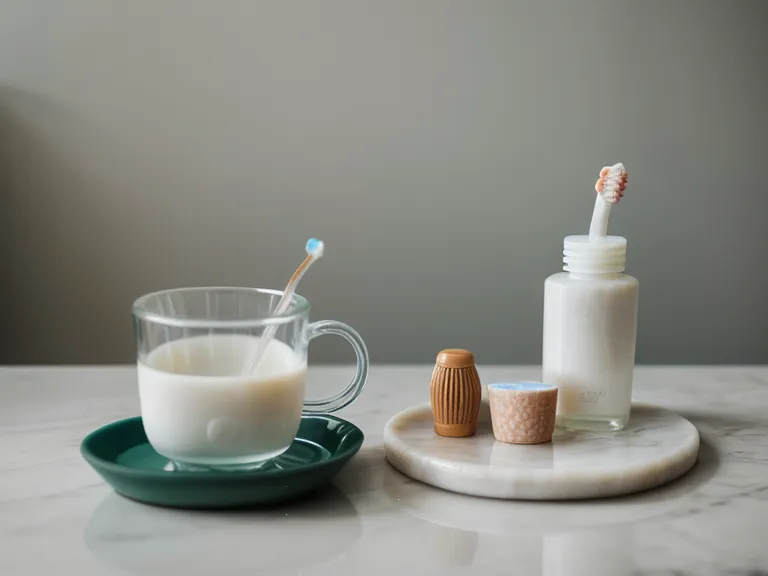
The most common follow-up question is whether you should just switch to a probiotic instead of worrying about the rinse at all, and the honest answer is: it depends on what you're solving for, and it's a bigger topic than one section can cover. Strain selection matters more than most people assume: some strains compete for the same real estate as gum-disease bacteria, others focus more on fresh breath, and picking one without knowing which job you need it to do is a bit like hiring a plumber to rewire your house. Timing matters too; taking a tablet right after a mouthwash rinse, or washing it down with a big glass of water, defeats a lot of the purpose, since you're just flushing it past the tissue it needs to sit against.
Two other questions come up almost as often: how do you know a probiotic is actually colonizing instead of just passing through, and whether the cost per dose is worth it compared to just improving your rinse and diet. Both are legitimate, both deserve more room than a paragraph, and both are on the list of things I'm still gathering enough data to answer properly. Shelf life is its own rabbit hole too — a reader named Tomás in Phoenix emails me updates on his own testing pretty regularly, and he's asked some pointedly specific questions about how altitude affects CFU viability that I still don't have a satisfying answer for.
If your specific situation is heavy coffee intake wrecking your breath by the afternoon, I already went deep on that one separately — here's the writeup on the best oral probiotics for coffee drinkers to fix chronic bad breath, since coffee acidity changes which strains are worth prioritizing in the first place.
Replacing the Blue Bottle
Ditching the harsh rinse doesn't mean doing nothing — it means being more deliberate about what fills that slot in your routine. Alcohol works as a drying agent, and a dry mouth is genuinely easier for opportunistic bacteria to colonize, because saliva does a lot of unglamorous defensive work that gets stripped out right along with everything else. Xylitol is one ingredient I look for now, mostly because certain bacteria can't metabolize it properly, which keeps their numbers in check without the blunt-force approach — there's a whole separate piece on why xylitol and oral probiotics work well together if that pairing interests you specifically. pH matters too; a lot of drugstore rinses lean acidic because it makes the flavor taste sharper, and acidic environments aren't great for enamel over time regardless of what's swimming around in them.
Swapping the rinse itself is only half of it, though. If you're adding a probiotic on top of a routine that still includes a disruptive mouthwash at a different time of day, you can undo a lot of the benefit without realizing it, which is a more specific problem than people expect. And if you've been on the harsh stuff for years, there's a real argument for reseeding deliberately rather than just hoping the good bacteria wander back in on their own — that's a structured process, not something that happens by accident, and it's worth its own explanation elsewhere rather than a rushed version here.
Is the Rough Patch After Quitting Mouthwash Normal?
Some people notice a stretch where things feel a little off after cutting out a harsh rinse, not worse exactly, just unfamiliar, since you're used to that stripped, tingly sensation reading as "clean" even though it's really just irritation. That adjustment isn't universal, and it's not a sign anything is going wrong; it's closer to what happens when hair readjusts after you stop using a harsh shampoo and has to relearn its own oil production for a while. Kenji, a coworker on my team who has kept an actual running tally of my predictions against what actually happens with this stuff, likes to point out that my hit rate on "this will feel weird for a bit" has been pretty solid, which I choose to take as encouragement rather than a joke at my expense.
Where I Land on This
If there's one takeaway worth carrying out of this page, it's a simple filter: before reaching for anything marketed on how much it kills, ask what it's leaving behind instead. A rinse that wipes out 99.9% of bacteria isn't solving a problem, it's resetting one, and the bacteria that grow back fastest after a reset are rarely the ones you wanted in charge. Swapping in something gentler, giving saliva room to do its job, and feeding the strains you actually want to win — that's the whole strategy, and it holds up better over time than anything built around a kill count.
None of this is meant to replace an actual dentist, especially if something feels acutely wrong rather than just different — this is pattern-matching from someone who reads too many labels, not a clinical opinion.