My tongue used to stick to the roof of my mouth by the middle of every workday, every single time, no matter how much water sat next to my keyboard. It wasn't really thirst — three liters in and the feeling never budged — and it took an embarrassingly long time before I connected the dryness to my oral microbiome rather than my hydration habits. Dry mouth, it turns out, has less to do with how much water crosses your lips and more to do with what's actually living in your mouth, which is an inconvenient thing to learn when your job is remote and your only real audience most days is a laptop camera.
Quick disclosure before I get further into this: a few of the links below are affiliate links, and if you buy through them I earn a small commission at no extra cost to you. Everything mentioned here has actually spent time on my desk or in my bathroom cabinet at some point (my collection of half-used bottles is not something I'm proud of) — I'm not a dentist, a microbiologist, or a licensed anything, just someone who reads too many studies during lunch breaks, so check with an actual professional before you change your own routine.
The Mouthwash Miscalculation
A routine cleaning was where this started, when my dentist mentioned, almost as an aside, that my alcohol-based mouthwash worked like a scorched-earth policy on my oral cavity (his words, not mine, though I've stolen the phrase since). It killed off the bad bacteria, sure, but it took the good ones with it too, the ones actually responsible for keeping everything lubricated. For years I'd treated my mouth like a server room that needed sterilizing, when apparently it works more like a fish tank, disturb the balance and the whole system crashes.
That crash, in my case, showed up as chronic dryness, and untangling it became what I now think of as the Mouthwash Paradox: the harder I "cleaned," the drier and more uncomfortable things got. Swapping the rinse habit for tablets turned into its own bumpy adjustment, something I've documented in more detail elsewhere, and the deeper mechanics of how mouthwash tips your overall bacterial balance are really a subject for that other post rather than a repeat here.
Before landing on anything that actually helped, I ran through the usual home remedies, including a stretch of oil pulling — swishing coconut oil around for a full thirty minutes every morning before coffee, like some kind of penance. All it left me with was a sore jaw and a mouth exactly as parched by lunchtime as before I'd started.
Why Doesn't More Water Fix Dry Mouth?
Hydration apps love to tell you you've hit your goal, and mine kept insisting I had — so why did my tongue still feel dusted in flour by early afternoon? Saliva isn't just water. It's a whole cocktail of enzymes and proteins doing quiet protective work, and flooding your mouth with plain water over and over dilutes that cocktail instead of topping it up.
I'd already been running ProDentim for general upkeep, and it's genuinely solid — loaded with enough strains and CFUs that dosage was never a worry — but it felt like the wrong tool for a mid-shift emergency. What I actually wanted was something small enough for a desk drawer, cheap enough that trying it wasn't a real commitment, and narrow enough to just handle the dryness instead of my entire mouth's ecosystem. That's the gap BioDentex ended up filling.
Running My Own BioDentex Trial
BioDentex leans on a five-strain blend instead of stacking in as many organisms as possible, and one of those strains is Streptococcus salivarius, which behaves like the mouth's own peacekeeping force. Picking the right specific strain — a K12-versus-M18 kind of debate — probably matters more than the raw count printed on the label, though that comparison deserves a post of its own rather than a detour here.
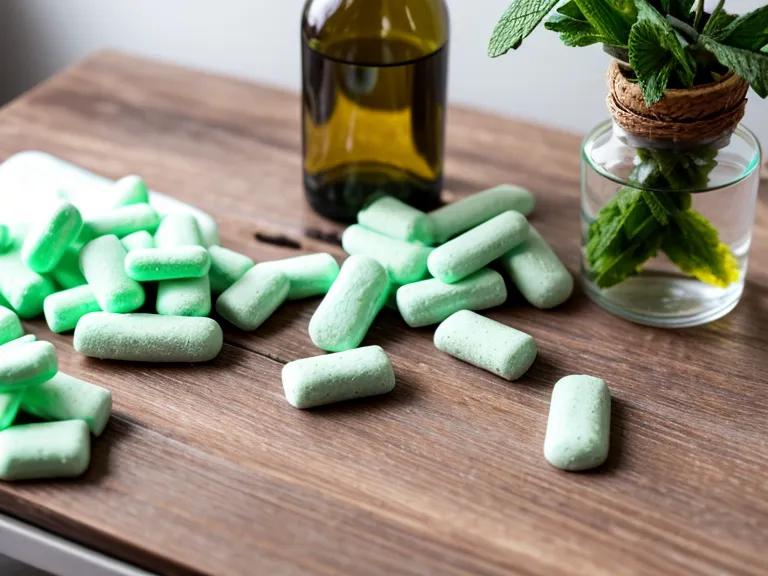
The habit itself was easy to keep: one tablet after lunch, dissolving slowly while I sat through whatever meeting came next, chalky and faintly minty without tipping into the artificial burn most rinses have. Before committing to a desk-drawer stash instead of the fridge, I checked whether the strains needed refrigeration to survive, since a probiotic that dies at room temperature is just an expensive breath mint.
Kenji, a coworker on my team who first clocked me dissolving tablets on camera during a sprint call, still brings it up every few weeks — though I happen to know he ran his own two-week trial not long after and has never once admitted it out loud.
The Shift Around Week Eight
By week eight, the change had become ordinary enough that I nearly missed it. One morning, before I'd even opened my eyes properly, I ran my tongue across my front teeth out of habit, braced for that familiar felt texture, and there was nothing there — just smooth enamel, no film at all. It wasn't dramatic, just quietly normal, the way things apparently used to be before years of disrupting them.
That same week the dryness held off even through long stretches of talking, the kind of forty-minute client call that used to leave my throat feeling sanded down by the halfway mark. Part of that probably comes down to how Xylitol and oral probiotics work together — one clears the way, the other moves in and builds. Timing matters too, it turns out: knock back a glass of water right after a tablet and you've basically rinsed the whole point down the drain, a mistake I've since shifted to my nighttime routine instead of chasing tablets with coffee.
Gum Stopped Making the Cut
Gum was the first thing to go. It had been my stopgap for years, and most brands are loaded with sugars or acids that undo whatever balance you're trying to protect in the first place. When I'm rebuilding a mouth from scratch, I lean on a full twelve-week reseeding protocol, though the workday version of that project really just came down to one tablet and consistency.
If you want the full rundown of what each strain in a blend like this is actually supposed to do, I put together an Oral Probiotic Strains Glossary that goes through it strain by strain.
Is BioDentex Right for Your Desk?
Working from home and hitting that same mid-afternoon dryness usually means the fix isn't another water bottle — you might be washing out the exact bacteria trying to help you. There are a handful of small tells that a probiotic is actually colonizing instead of just passing through, and the tongue-check became mine; it's worth finding your own version and paying attention to it. BioDentex has held a steady spot in my Austin bathroom cabinet ever since, right next to bottles that didn't survive the first week. Even on weekend mornings after a swim at Barton Springs Pool, when my mouth used to feel chalky within the hour of getting out of the water, that dryness just doesn't show up anymore.
Run the actual cost per CFU on a few of these products and the budget option doesn't automatically lose to the premium one — it's a spreadsheet exercise I've done more than once, though I won't drag you through it here. A reader named Tomás Vega, who emails me monthly updates on his own experiments from Phoenix, is far more disciplined about this than I ever was: he changes exactly one variable at a time, impressively so (and, if I'm honest, a little smug about it), where I was happy to overhaul my entire routine in one go and just hope for the best.
For anyone chasing the absolute ceiling of microbial diversity, ProDentim is still the one I'd point to as the long-term, whole-mouth option. But for the narrower problem of a mouth that dries out somewhere around the early-afternoon slump, BioDentex is the tool that actually earned its spot in the drawer. The lesson that stuck with me, the one I'd hand to anyone stuck in the same loop, is that treating your mouth like something to sterilize only ever makes the problem worse — treat it like a small ecosystem you're maintaining instead, and the dryness tends to sort itself out.
If you're ready to stop treating your mouth like something that needs sterilizing and start working with its bacteria instead of against them, you can find BioDentex right here. Your microbiome, and whoever's on the other end of your next long call, will both notice the difference.